

Puppy Socialization in Toronto: A Trainer's Guide to the Critical Window
I've raised and trained dogs professionally for nearly a decade: police dogs, dogs on film sets, and now the condo puppies of Liberty Village. The biggest socialization mistake I see in Toronto isn't doing it wrong. It's waiting (for the last vaccine, for warmer weather, for a free weekend) until the window has quietly closed.
Why the window matters more in a city
Between roughly 4 and 16 weeks of age, a puppy's brain files new experiences under "normal" almost automatically. After that, anything unfamiliar defaults to "possibly dangerous." A rural dog who misses the window has a quiet life anyway. A Toronto dog who misses it faces streetcars, sirens, elevators, and crowded sidewalks every single day, as threats.
Veterinary behavior organizations are blunt about this: the behavioral risk of under-socialization outweighs the medical risk of careful, controlled outings before full vaccination. This window is also when one intense scare can produce lasting fear (trainers call these stretches "fear periods," the first around 8 to 10 weeks). The practical rule: experiences in this window should be frequent, varied, positive, and never overwhelming.
The timeline, honestly
| Age | Focus | What it looks like downtown |
|---|---|---|
| 4–8 weeks | Handling and household life (usually at the breeder's) | Touch paws, ears, mouth; vacuum, doorbell, kitchen noise |
| 8–12 weeks | Controlled new experiences after first vaccines | Carried outings, car rides, invited guests of all kinds |
| 12–16 weeks | Public exposure; daycare can start | Quiet sidewalks, streetcar watching, elevator practice, first puppy daycare days |
| 16+ weeks | Consolidation, not catch-up | Playgroups, busier streets, filling any gaps gently |
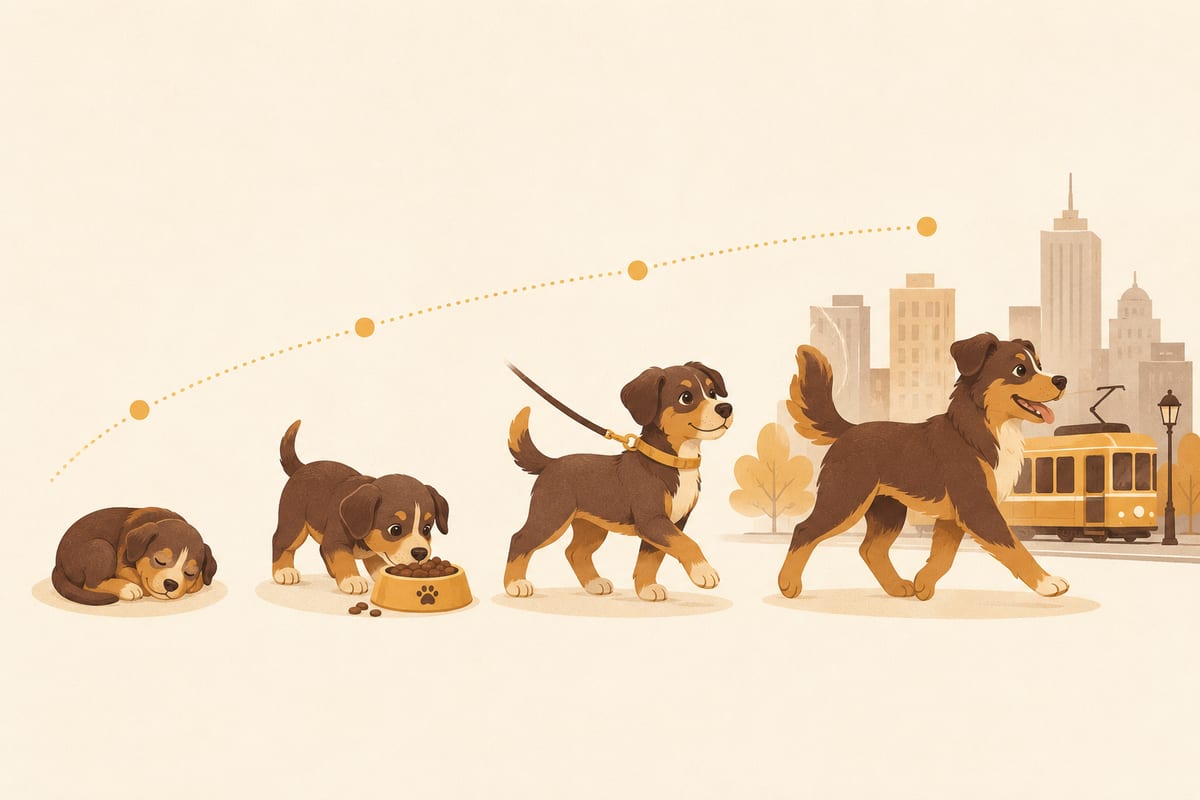
Notice that most of the window falls before full vaccination, which is exactly why so many owners stall. And 16 weeks isn't a cliff; socialization after that still works, it's just slower and takes more deliberate effort.
The vaccination dilemma, solved (with one big warning)
Your vet is right that an unvaccinated puppy shouldn't touch ground where unknown dogs have been. Toronto's dog density makes that real. But "stay home until 16 weeks" is terrible behavioural advice. The solution is exposure with managed ground contact: carry your puppy through busy or dog-heavy stretches, use car rides through different neighbourhoods, invite all kinds of guests over, and arrange playdates with vaccinated adult dogs you know.
Now the warning, because I see the fallout weekly. Puppies who get carried everywhere learn that carried is how dogs travel. The mechanism is simple and sneaky: puppy hesitates on the ground, owner scoops them up, hesitation gets rewarded. Repeat for two months and you own a dog who plants like a mule and stares up at you. Take a doodle I'll call Waffles, who arrived at his assessment riding in a tote bag at five months old, legs fully functional, worldview firmly "bag or nothing." His owners weren't lazy; they were following the carry advice a little too well. It took weeks of patient ground work to renegotiate.
The fix is built into the routine from day one:
- Every outing mixes carrying with short ground time. Carry through the intersection, then two or three minutes of walking and sniffing on a quiet, clean block. Down, up, down again. The ground is part of every trip.
- Pick up for real reasons only: an off-leash dog rushing in, broken glass, genuine panic. Not for mild hesitation, and not because the puppy asked nicely.
- Feed movement, not refusal. Treats flow while your puppy walks, sniffs, and explores. A puppy who plants gets a cheerful pause, some slack in the leash, and a chance to make a better choice; they do not get airlifted.
Pro tip: pair every new sight or sound with something delicious. A streetcar rumbling past while your puppy eats chicken from your hand isn't scary; it's a predictor of chicken. That mechanism never stops working.
Teaching Toronto's soundtrack
City sound sensitivity is the most preventable behaviour problem I know. Start indoors: play recordings of streetcars, sirens, and construction at low volume during meals, raising the volume over days, not minutes. Then move to real life at a distance. A bench half a block from the tracks, treats flowing as the streetcar passes, closing the gap only as fast as your puppy stays loose and happy. Distance is your volume knob.
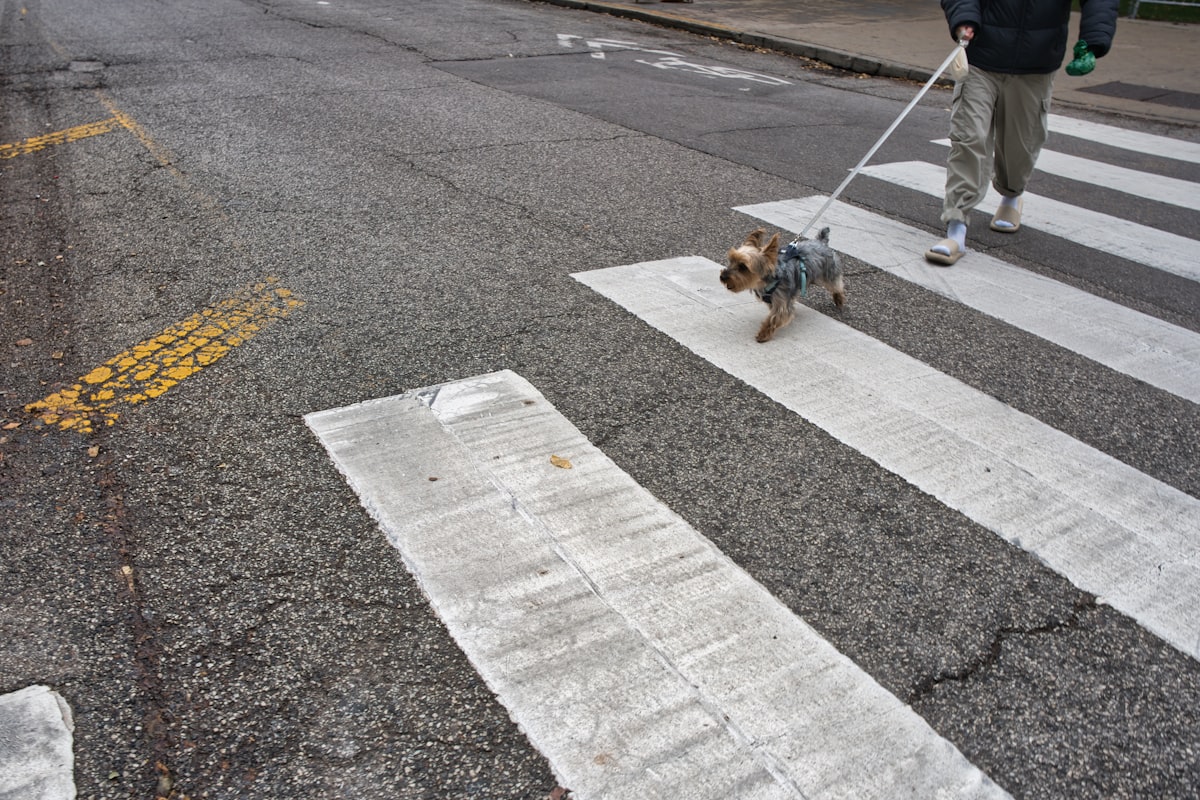
Elevators deserve their own plan if you live in a high-rise: ride at quiet times, treat through the chime and the floor-drop feeling, keep the first dozen rides short. A puppy who learns elevators at ten weeks never thinks about them again.
Stairs: the fear nobody plans for
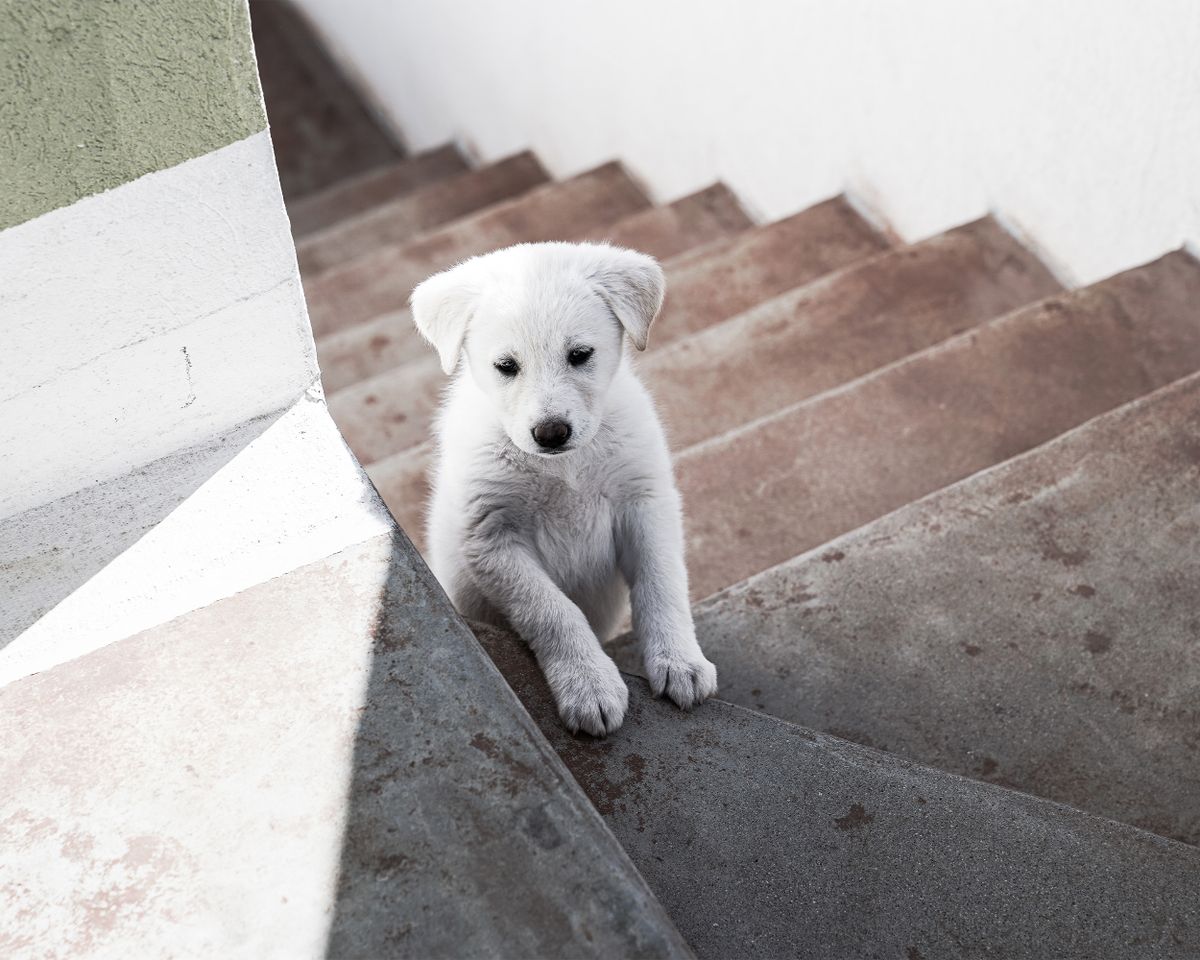
Every week someone tells me their puppy is "being dramatic" about stairs. They're not being dramatic. To a puppy, a descending staircase looks less like steps and more like a striped cliff: depth perception is still developing, the footing is new, stairwells are often dim and echoey, and it all stacks. Add one slip during the socialization window and you can get a fear that outlasts puppyhood.
The protocol that works:
- Play beside the stairs first. Meals, games, easy tricks near the bottom step. Stairs should predict good things before anyone climbs anything.
- One step up, that's the whole lesson. Lure onto the first step, celebrate, let them hop off. Repeat until it's boring.
- Down is harder than up. Start from just one step, put a treat visibly on the landing, support the chest if needed. Never start with a full flight.
- Pick friendly stairs to learn on: solid risers, good grip, decent light. Open metal steps are advanced-level; don't start there.
One health note for large-breed owners: growing joints and long staircases are a bad combination. A few slow, controlled steps are great socialization; daily forced climbs of multiple flights are not. Carry the giant puppy for the marathon stretches and let them practice the short ones. Yes, I realize I just told you to carry the puppy two sections after warning you about carrying the puppy. Rules have asterisks; the asterisk is "growing joints."
Is it fear, or is it a negotiation?
Here's the distinction that changes everything, because the wrong response to each makes it worse. Watch the body, not the behaviour:
- Real fear looks like: crouched body, weight shifted back, tucked tail, pinned ears, lip licking, trembling, and (the reliable tell) refusing food they'd normally inhale. A frightened puppy often can't eat.
- Negotiation looks like: relaxed body, planted feet, expectant eye contact, happily taking treats, maybe offering a sit. This puppy walked fine in the lobby and went on strike at the exact corner where refusing once earned a lift home.
For real fear: add distance, lower the intensity, pair the scary thing with food, and let them retreat and choose to re-approach. You cannot reward fear with food; that's classical conditioning doing its job. What you can do wrong is force. Dragging a scared puppy toward what frightens them teaches exactly one lesson: that you can't be trusted near scary things.
One more ingredient, and it's the one owners overlook because it's about them: your own state travels down the leash. If you tense up at the top of the staircase, shorten the leash near streetcars, or hold your breath when a big dog approaches, your puppy reads all of it and files the situation under "my human thinks this is dangerous." We extrapolate our own fears onto our dogs, and dogs are excellent copy machines. After a decade of this work I can often guess an owner's anxieties just by watching their dog. So before you work on the puppy's fear, check your end of the leash: slow breath, loose lead, boring stroll posture. Calm is contagious in both directions.
For negotiation: stay calm, stay put, and stop paying out. No scooping, no treat showered on the striker, no turning back home. Cheerful voice, loose leash, a clear "let's go," and the treats arrive when feet move. This is what "strict when it matters" actually means. Not harshness, just consistency: the strike stops working, so the strike stops. Give it time; a puppy who has been winning this game for weeks will test hard for a few days before accepting the new economy.
A French bulldog I'll call Gnocchi came to his assessment with a well-rehearsed routine: fifty metres of happy trotting, then a dead stop, sit, and the slow dramatic head-turn toward his owner. Oscar-worthy. His body told the real story: loose posture, soft ears, and he took every treat like a tiny vacuum cleaner. That's not fear, that's a business model. His owner admitted the strikes had been ending in a carry home since he was tiny. Inside our playroom, with nobody to negotiate with, Gnocchi walked, played, and climbed like a mountain goat. We agreed on the new rules together, and his owner later told me the sidewalk strikes lasted four more days before Gnocchi quietly closed that department.
Where daycare fits (and where it doesn't)
I'll be straight about what we offer: Fluffy Paws is a daycare, not a puppy class. We don't run standalone training courses. What daycare gives a young dog, starting from 12 weeks old once their 12-week vaccinations (including rabies) are done, is the thing you can't create at home: daily, supervised play with well-matched dogs, grouped by temperament and energy, with training reinforcement woven through the day. Staff who interrupt rude play and reward polite choices are doing exactly the fear-vs-negotiation work described above, all day. A half-day at $38 is the right starting dose for most puppies.
Two policy notes: puppies can start from 12 weeks old, and intact dogs are welcome until 6 months; past that, dogs need to be spayed or neutered to attend. Bring your vaccination records and questions to the free meet & greet.
If your puppy needs formal obedience work, a group puppy class (typically $150–$300 for a series in Toronto) or a private trainer is the right tool, and I'm happy to say so at the assessment. The two approaches stack beautifully: class for skills, daycare for social fluency.
Frequently asked questions
When can my puppy start daycare?
From 12 weeks old, once their 12-week vaccinations (including rabies) are done. That puts daycare inside the socialization window, where it does the most good. Every dog starts with a free meet & greet and temperament assessment first.
Does my puppy need to be spayed or neutered for daycare?
Not as a puppy. Intact dogs are welcome until 6 months old; past that, dogs need to be spayed or neutered to attend group play.
Is it safe to take my puppy outside before their shots are done?
Yes, with rules: no ground contact in dog-heavy public areas, no unknown dogs. Carried outings mixed with short ground time on clean quiet streets, car rides, and visits with vaccinated dogs you know are all safe and hugely valuable. From 12 weeks, vaccine-screened puppy groups at daycare become an option too.
My puppy refuses to walk and just sits down. Is that fear?
Check the body language. Tucked tail, trembling, and refusing food point to fear: add distance and go slower. Relaxed body, expectant stare, happily eating treats points to a learned strike: stay cheerful, stop rewarding the sit-down, and pay for forward motion instead.
My puppy is already 6 months old and nervous. Is it too late?
No, it just takes longer. The same principles apply: distance, food, short sessions, never forcing. Older puppies with gaps often do best starting with half-days and a carefully matched playgroup.